
The Best Modern CRM in 2026 Is Attio
Six CRMs ranked on how well a small revenue team can run on them, and why Attio takes first place

Most CRM rankings are written by people who have never had to rename a field on a Friday afternoon. We run our own pipeline on one of these, and every week we watch revenue teams try to bend the other five into shape. So this ranking is judged on three things: how fast you can model your business, whether the AI earns its seat cost, and what the system does with a deal your own reps did not source. The numbers on each section below are the ranking. Prices are the UK list rates, per seat per month, billed annually.
Attio
Attio takes first because the data model belongs to you. You create objects for the things your business runs on, partners, resellers, workspaces, investors, and the CRM does not argue with you about it. Records enrich themselves, email and calendar sync in real time, and the research agents fill columns you would otherwise pay a contractor to fill by hand.
Pricing is legible. Free up to three seats, then £27 on Plus, and £59 on Pro once you want sequences and call intelligence. Keep an eye on workspace credits if your team leans hard on enrichment. Attio raised a $52m Series B led by GV in August 2025 and passed 5,000 paying customers, and the release notes show it: the roadmap moves faster than anything else on this list.
folk
folk takes second for the reason most rankings miss. Partner-led teams run on relationships, not deal stages. When your next quarter depends on twelve conversations with people who can introduce you to buyers, a marketing automation suite is the wrong shape entirely, and folk is built for the network instead. The Chrome extension pulls someone off LinkedIn into a list in one click, and the spreadsheet view means nobody has to learn a new way of thinking.
Standard is £21, Premium £43. There is no permanent free plan, only a two-week trial. It holds 4.5 out of 5 across more than 300 G2 reviews, which matches what we hear from BD leads using it. Rule it out if you need forecasting or a mobile app.
Twenty
Twenty is third because owning the code now beats owning another automation suite. AGPL licensed, Y Combinator backed, past 45,000 GitHub stars, and free if you host it yourself. Their managed cloud works out around £7 a seat, priced in dollars at $9. The object model follows the same thinking as Attio's, so you can shape records around partners and referrals without waiting for a vendor to ship the feature.
What you are buying is a roadmap rather than a finished product. Reporting and integrations trail the paid tools, and somebody on your team owns the upgrade path. Take it when data residency is a hard requirement, or when your engineers would rather write a plugin than a support ticket.
Every CRM on this list can tell you which rep closed the deal. Not one of them can tell you which partner started it.
HubSpot
If marketing owns most of your funnel, HubSpot is still the sane pick. One contact record carries forms, emails, sequences and deals, and the free tier does real work rather than acting as bait.
The bill is where it bites. Sales Hub Professional runs £85 a seat, and the things teams assume are standard, sequences, automation, reporting worth reading, all sit at that tier or above. Starter is £18 but strips most of it back out again. Fourth because you pay for the breadth whether you use it or not.
The column your CRM is missing
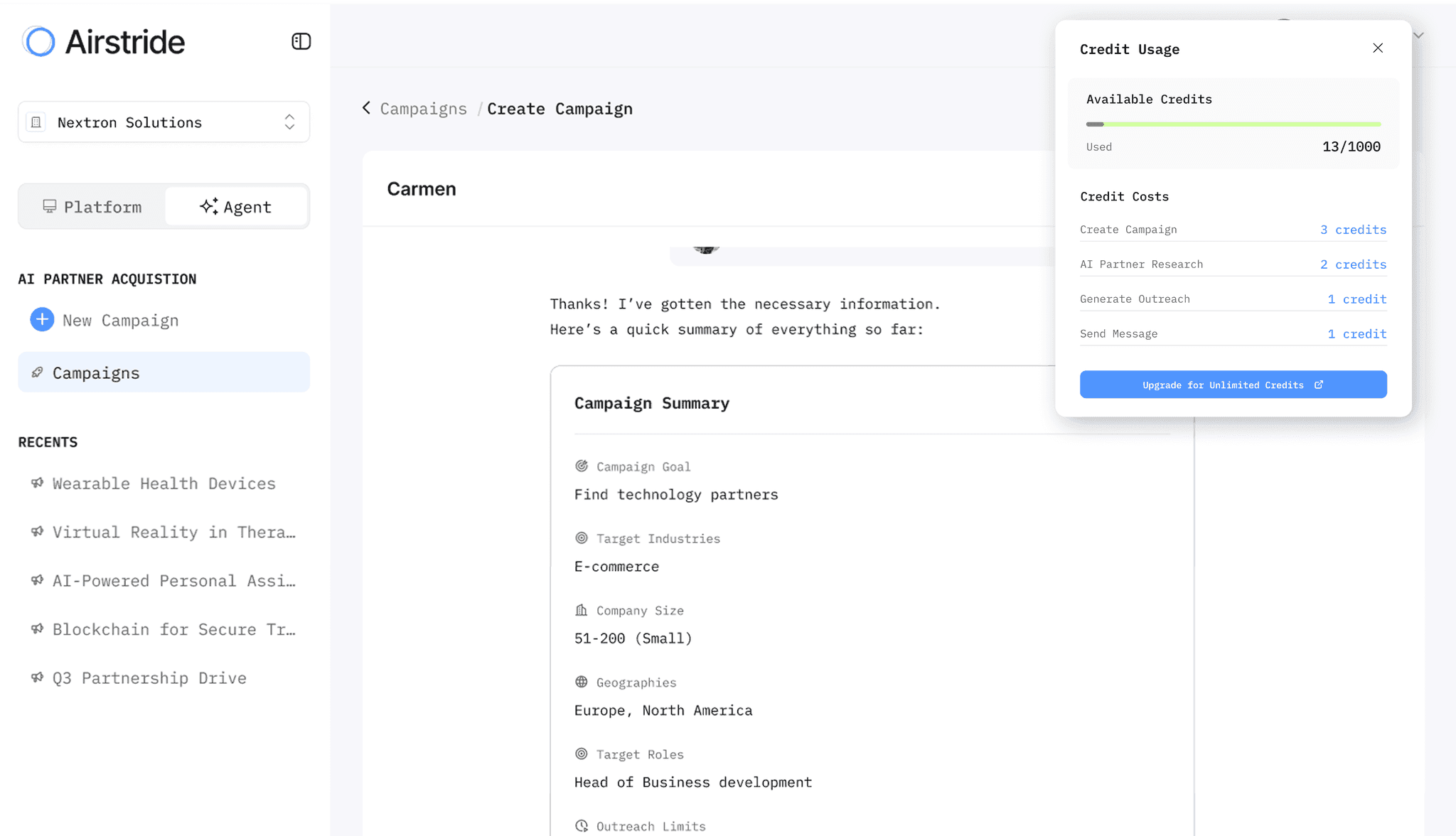
Airstride runs alongside Attio, folk, HubSpot and Salesforce, writing partner attribution, deal registrations and co-sell activity back into the records your team already opens every morning.
Your CRM stays the source of truth for revenue. It just learns where that revenue came from.
On Attio? We are listed in the Attio app directory.
Pipedrive
Pipedrive does one job: move deals across a board. A rep opens it, drags a card, closes the tab. Nobody needs a training session.
Plans run from Lite at £14 to Ultimate at £79, before VAT. The ceiling arrives early though. Custom objects are thin, reporting stiffens up fast, and the first time you need to track something that is not a person or a deal, you start bolting on other tools.
Salesforce
Salesforce lands last on a modern CRM list and first on an enterprise one. Past about 100 reps, with territory rules, a deal desk and a RevOps team keeping it honest, nothing else carries the weight.
Below that headcount it is a tax. You will pay for an admin, an integration partner, and six weeks of work before your first report tells the truth. Buy it when the org chart forces your hand, not because a board deck named it.
Key Takeaways
Attio wins because it bends to the shape of your business instead of asking you to bend to its. folk and Twenty follow for narrower but honest reasons: one is built for a network you work by hand, the other hands you the source code. The three suites below them sell reach, simplicity and raw scale, and plenty of teams need exactly that. Whichever one you land on, check what it does with a deal a partner sourced, because that slice of pipeline keeps growing and most CRMs still file it under inbound.
